Speed Demons
Reflections 3 Years Post-Wreck


May was full of beautiful cycling moments and ruminations. In my last post, I was preparing for my first Five Boros Ride in New York City. Riding in a new environment lit up my imagination. During the second week of May, Atlanta had its annual Cycling Festival. This year, I participated in a few new events and led a ride for the community. For me, the Atlanta Cycling Festival (ACF) week also serves as an anniversary reminder of my wreck during ACF 2023. In the years since, I have spent considerable time pondering cycling, infrastructure, and accidents. These reflections dovetail with an ongoing dialogue on cycling safety that has resurfaced after a tragic and fatal head-on collision in NYC on the Queensboro Bridge in late May.


1. Dense by Design
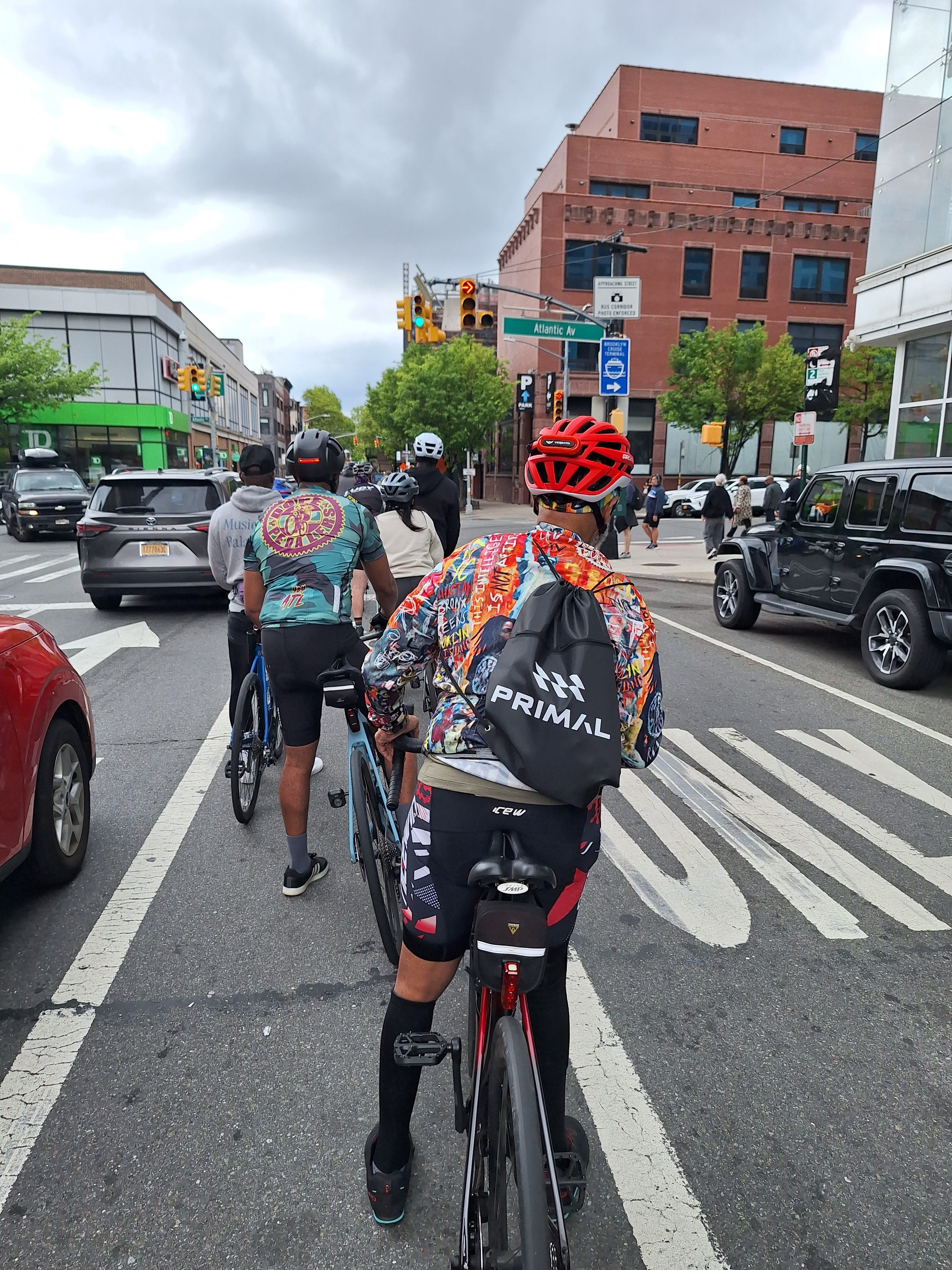
The 40-mile route for the Five Boros Ride showcased a scenic New York City connected by impressive bridges, tunnels, and causeways. The route for the ride had to accommodate 32,000 cyclists, not the usual traffic. Thanks to DopePedalers, I also went on a locally-organized group ride in Brooklyn the day before. With over 100+ people, we snaked our way through dense urban settings. It felt a bit like our local Critical Mass. Spicy with speed, but with better infrastructure. Compared to Atlanta, there were more bike lanes, connecting passageways, and clearer signage.
Riding bikes in NYC felt different. It seemed that at least cyclists and drivers could coexist. At the very minimum, bikes had their own designated space. The cycling infrastructure was there, even if it was an afterthought. For example, the bridge bike path from Manhattan to Brooklyn was so narrow it felt congested on a Saturday morning. If you had a flat or needed to pull over (for a photo!), there was no shoulder. Trying to pass another cyclist seemed scary. To add to the mix, in New York, as all over the country, motorized vehicles are also showing up in bike lanes. Electric bikes, motorized scooters, and speedy one-wheel devices are joining the “safe spaces” of cycling infrastructure. At this density, the likelihood of collision increases statistically. Cycling lanes were designed for people-powered pedaling. How do we ensure we can all use this infrastructure safely?


2. Not Your Lawyer
Many people imagine regulation as one way to address what type of wheels should be in the bike lane. While we do need clear rules and de minimus enforcements, rules are not a panacea. I do not hold out much hope for law enforcement to monitor or effectively protect us. Simply look at the history of policing in the US to see how it operates to reinforce race, class, and property.
Law follows society, not the other way around. Ergo, meaningful work on this at a policy level is probably ages away. For example, the Georgia Department of Driver Services has some content on the regulations around mopeds versus scooters. The very basic details make no mention of aftermarket modifications, which render some of the regulations moot, nor do they explain how similar classes of wheels should relate to road rules. Even now, as it comes to cyclists, I suspect a police officer is more likely to write the cyclist a ticket than enforce the 3-feet space of separation that cars are supposed to offer us. Some police don’t even know the basics of “bike law.” I doubt attempting to understand cycling’s nuance is high on police training. I suspect an angry Karen could do more damage than a pile of legalistic regulations. As well as better design, we need effective regulation, and something more.
3. Crash Conditioning
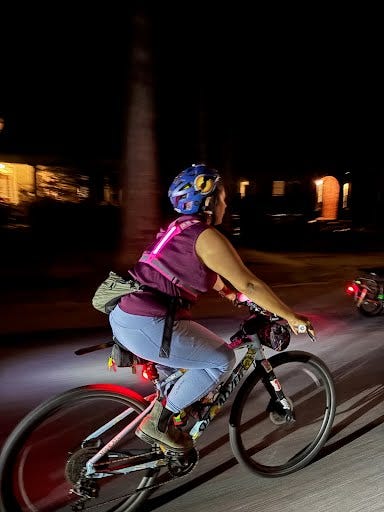
When people ask how my recovery is going, I share that most of my physical wounds are healed. The remaining scars manifest as a form of caution around speed and cyclists’ behavior. As a type of exposure therapy, I took a track certification at the Velodrome in the spring of 2024. I realized my capacity for speed is influenced by my expectations of other riders’ behavior. I entirely failed the certification process. I could not quite relax into the unknown, unexpected handling of my colleagues.
This is not a surprise to me, considering my recurring dynamic when I head downhill in a group ride. Though I do not use a speedometer, my body knows when I’m going over 20 mph. Doing that speed triggers something in my body. As I gain momentum, my eyes scan the sidelines. I look out for a phantom bike, or some other unexpected projectile sailing through the sky. Reflexively, I begin to tap the brakes; I slow down. This plateau remains one long-lasting consequence of my wreck.
Collecting miles on the road makes us confident and cautious. For new cyclists, there is no coherent training, resource, or guide in order to prepare them. Bringing your bike out of your house has known dangers. I think about speed differently now. I know that the severity of a collision has a direct relationship to speed. Before going fast now, I consider the purpose of speed. I am more likely to speed up if it is at the tail end of a group ride, and people are corking an intersection. I do not speed from a place of bravado. As I ride, I consider with humility the limits of my bike, the road, and my ability to estimate cyclist behavior.
4. Earned Truths
Within group rides, there is some community wisdom that would go a long way. (1.) I do know that accidents at speed can be the real danger on the shared paths. (2.) While we are typically worried about the danger of cars and road hazards, other riders can be the most dangerous things out there. (3.) A ride leader can set the pace, but it is our group norms that can influence ride behaviors.
On the road, many cars and people are nervous around them. Most motorists do not really know how to interact with cyclists or how to give them safe space. When car-driving people try out motorized two-wheels, they tend to bring car energy with them. It takes some time behind the handlebars to learn how to safely move through a crowd. Weaving as a motorized bike necessarily involves different pacing. I often wonder if we are in need an etiquette guide.


5. Accountability
During this 2026 ACF, I attended the Tuesday Department of Transportation (DOT) ride. I was pleasantly surprised to see my local representative in the group. I overheard good ideas floating in conversations about bike lane protections. Along our ride route, signage along W. Peachtree blocked our entry to Tech Square. Our dicey navigations spoke volumes about the state of cycling in Atlanta. When the DOT ride ended at Specialized Bikes, we got a few words from Bike Law about what to do in a cycling accident. Afterwards, I wandered off to 97 Estoria.
In line for tacos at Vice Truck, I happened to cross-paths with the guy whose sidewalk trick-doing-jumping which wiped me off my bike. I gave him a hug; I had long ago forgiven his actions. Still, after nearly three years to the day, I did not anticipate the closure would get that evening. He acknowledged I would not have wrecked had he NOT been doing tricks. This seemed oddly fitting, to end the night of the DOT ride. The simple acknowledgement of responsibility and the resultant consequences felt cathartic. For me, it left the seed of hope. If we ride with the knowledge that our behaviors could have big repercussions, we would be a few steps closer to safer paths for all of us.